
Jesus Shoes: Faith, Fashion, and a Fierce Debate
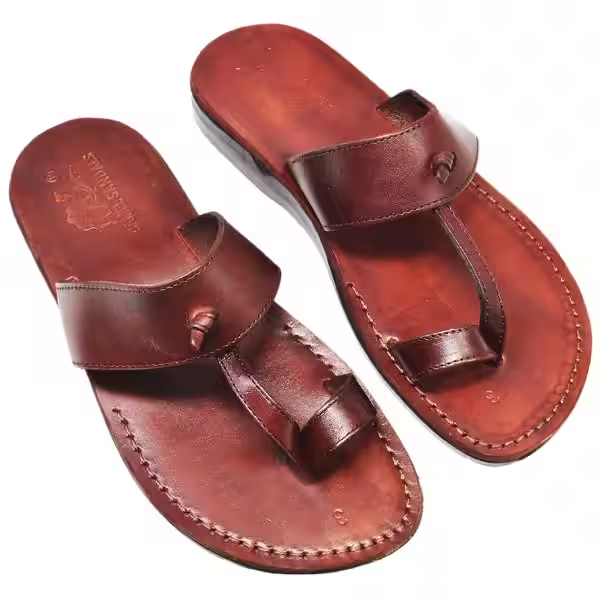
The story of "Jesus Shoes" is a fascinating blend of religious iconography, contemporary art, and viral marketing. While the name immediately conjures images of sandals worn in ancient Judea, the reality is far more modern and surprisingly controversial. This article will explore the story behind these unique shoes, examining their design, the reactions they provoked, and the broader questions they raise about faith, art, and commerce.
- The MSCHF "Jesus Shoes": A Controversial Creation
- Beyond the Hype: Understanding the "Jesus Shoes" Phenomenon
- The "Jesus Sandals": A Different Perspective
- Conclusion: A Tale of Two Shoes
-
Frequently Asked Questions: Jesus Shoes
- What are "Jesus Shoes"?
- What makes them unique?
- Who created the Jesus Shoes?
- Where can I buy a pair?
- Are the Jesus Shoes a mass-produced item?
- What are the materials used?
- What is the significance of the included holy water?
- Is there any religious endorsement of these shoes?
- What is the "INRI" inscription?
- What is the significance of Matthew 14:25 reference?
- What is the return policy?
- How much do they cost?
- Are there any other versions of the Jesus Shoes?
- What is the style and color code?
- Are there similar products available?
- How are the Jesus Shoes different from the "Jesus Sandals" offered by My Jerusalem Store?
The MSCHF "Jesus Shoes": A Controversial Creation
In 2019, the Brooklyn-based art collective MSCHF released a limited edition of Nike Air Max 97s, christened the "Jesus Shoes." These weren't just ordinary sneakers; they were a statement piece, a provocative work of art designed to spark conversation and challenge preconceived notions.
The shoes themselves are a customized version of the popular Nike model. The design features a striking color scheme of white and light blue, reminiscent of the color of water, a nod to the biblical story of Jesus walking on water. Adding to the religious symbolism, a gold crucifix adorns the laces, and the phrase "INRI" (Iesus Nazarenus Rex Iudaeorum – Jesus of Nazareth, King of the Jews) is subtly embroidered on the right heel. But the most unique, and arguably controversial, feature is the inclusion of 60cc of holy water, injected into the Max Air unit of the sole.
This seemingly simple addition transformed the sneakers into a highly debated item. The incorporation of holy water, a sacred element in many Christian faiths, within a mass-produced consumer product generated a wide spectrum of responses, ranging from fascination to outrage. The strategic placement of biblical references and symbolic imagery further amplified the controversy, turning the shoes into a powerful cultural artifact.
Beyond the Hype: Understanding the "Jesus Shoes" Phenomenon
The "Jesus Shoes" weren't simply a product; they were a commentary on faith, consumerism, and the blurring lines between art and commerce. MSCHF, known for its provocative and often irreverent creations, strategically utilized social media to generate a viral buzz around the release. This marketing strategy contributed significantly to the shoes' notoriety, highlighting the power of online platforms in shaping contemporary culture.
The shoes' limited edition release (only 24 pairs were made) and subsequent resale at significantly higher prices via platforms like Sotheby's only fueled the hype. This scarcity further solidified their status as collector's items, adding to their value and intrigue. The entire process, from the initial design to the resale, effectively demonstrated the potent interplay between art, commerce, and cultural impact.
Analyzing the Design Elements
Let's delve deeper into the specific design choices of the "Jesus Shoes." The inclusion of 60cc of holy water wasn't arbitrary; it was a deliberate artistic choice meant to challenge the viewer's perception of sacredness and commodification. The use of a readily identifiable Nike sneaker as a base provided a stark contrast between the secular – a mass-produced athletic shoe – and the sacred – holy water, a symbol of faith.
The subtle yet impactful placement of the "INRI" inscription and the gold crucifix further enhanced the religious undertones. These elements served not only as visual cues but also as a point of interaction, inviting viewers to engage with the inherent contradictions and complexities of the design. The reference to Matthew 14:25, subtly incorporated into the design, directly linked the shoes to the miracle of Jesus walking on water, raising questions about faith, miracles, and belief.
The "Jesus Sandals": A Different Perspective
In contrast to the controversial "Jesus Shoes," My Jerusalem Store offers a different interpretation of religiously inspired footwear. Their "Jesus Sandals," handmade in Israel, draw inspiration from the style of sandals worn during Jesus' time, while incorporating modern comfort and design elements. These sandals are not meant to be provocative or controversial; instead, they aim to provide a high-quality, comfortable, and aesthetically pleasing product rooted in historical and cultural context.
A Focus on Craftsmanship and Comfort
The emphasis with the "Jesus Sandals" is on craftsmanship and comfort. Made from genuine leather, they offer a unique and personalized experience. The leather insole molds to the wearer's foot over time, providing a customized fit, unlike mass-produced alternatives. The addition of a comfortable rubber sole also ensures both durability and practicality, addressing the limitations of historically accurate sandals.
This focus on quality and comfort sets the "Jesus Sandals" apart from the "Jesus Shoes." While the latter are a limited-edition, art-driven statement, the former are designed for everyday wear, appealing to customers who value both tradition and modern practicality. The "Jesus Sandals" are further differentiated by their availability in a range of styles, catering to different tastes and preferences. The Israeli origin adds an element of authenticity and cultural significance.
Conclusion: A Tale of Two Shoes
The "Jesus Shoes" and the "Jesus Sandals" represent two distinct approaches to incorporating religious themes into footwear. The MSCHF creation is a bold, provocative statement piece, designed to spark debate and challenge conventions. The "Jesus Sandals," on the other hand, offer a more traditional and comfortable approach, inspired by historical styles but crafted for modern use. Both, however, demonstrate the enduring power of religious symbolism in shaping popular culture and commercial products. The differing responses to these two approaches illustrate the complexity of religious imagery in a secularized world and the multitude of ways faith can be expressed and interpreted.
Frequently Asked Questions: Jesus Shoes
What are "Jesus Shoes"?
The "Jesus Shoes" are a unique, customized edition of the Nike Air Max 97 sneaker, created by the Brooklyn-based art collective MSCHF in 2019. They are not a standard Nike product.
What makes them unique?
The shoes contain approximately 60cc of holy water, injected into the Max Air cushioning unit. They also feature a gold crucifix as a lace jewel, "INRI" (Iesus Nazarenus Rex Iudaeorum) on the right heel, and a reference to Matthew 14:25 (Jesus walking on water) on the lateral forefoot.
Who created the Jesus Shoes?
The "Jesus Shoes" were designed and released by MSCHF, a marketing and art collective known for provocative and limited-edition projects.
Where can I buy a pair?
Currently, a pair of size 12 Jesus Shoes is being offered for sale by Sotheby's. Check their website for availability and details.
Are the Jesus Shoes a mass-produced item?
No, the Jesus Shoes are a one-of-a-kind, limited-edition item.
What are the materials used?
The shoes are primarily made of mesh and leather in a white and light blue color scheme.
What is the significance of the included holy water?
The inclusion of holy water is an artistic element that directly references religious symbolism and the overall concept behind the shoe design. It's part of the artwork and commentary.
Is there any religious endorsement of these shoes?
No. The shoes are an art project that uses religious elements; they do not represent an endorsement from any religious organization.
What is the "INRI" inscription?
"INRI" is an abbreviation of the Latin phrase "Iesus Nazarenus Rex Iudaeorum," which translates to "Jesus of Nazareth, King of the Jews."
What is the significance of Matthew 14:25 reference?
Matthew 14:25 describes the miracle of Jesus walking on water. This is a key reference point in the shoes' design concept.
What is the return policy?
The sale of the Jesus Shoes (as currently offered by Sotheby's) is final – no returns are accepted.
How much do they cost?
The current asking price is dependent on the auction bidding process through Sotheby's.
Are there any other versions of the Jesus Shoes?
To the best of our knowledge, the specific design and edition sold by Sotheby's is a unique and limited item. MSCHF may have created other small-batch editions, but the details would need further research.
What is the style and color code?
The style number is 921826, and the color code is 101.
Are there similar products available?
While there are not identical products available, other artists and companies may produce footwear incorporating religious or spiritual themes.
How are the Jesus Shoes different from the "Jesus Sandals" offered by My Jerusalem Store?
The "Jesus Sandals" are handmade leather sandals inspired by ancient styles, emphasizing comfort and craftsmanship. The "Jesus Shoes" are a modern sneaker design featuring religious symbolism as part of a limited-edition art project. The two are distinct and unrelated products.