
Understanding Adonai Nissi: More Than Just a Banner
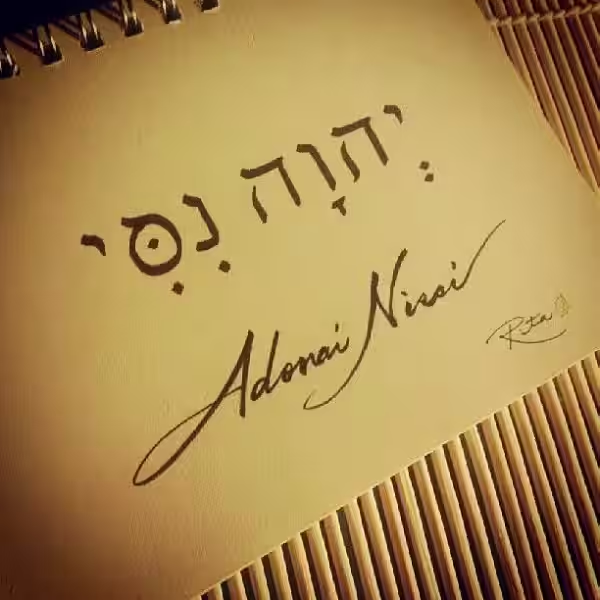
What does it truly mean to call God your "Adonai Nissi"? This powerful phrase, appearing in Exodus 17:15, resonates deeply with believers, but its full significance often goes unexplored. This article delves into the rich history and meaning behind Adonai Nissi, moving beyond a simple translation to uncover the profound implications of this divine title.
- Adonai Nissi: A Deeper Look at the Hebrew
- Adonai Nissi in Historical Context: Lessons from Egypt
- Adonai Nissi and the Prophetic Significance of Jesus
- Living Under the Banner of Adonai Nissi
-
Adonai Nissi: Frequently Asked Questions
- What does "Adonai Nissi" mean?
- What is the significance of the word "Nissi"?
- How does the Egyptian cultural context enhance the understanding of Adonai Nissi?
- How does the story of the bronze serpent relate to Adonai Nissi?
- Is Adonai Nissi just a military emblem?
- What does Adonai Nissi mean for believers today?
- Where is Adonai Nissi found in the Bible?
- What is the deeper spiritual meaning of Adonai Nissi?
Adonai Nissi: A Deeper Look at the Hebrew
The phrase "Adonai Nissi" directly translates to "The Lord is my banner." This seems straightforward enough, evoking images of a military standard or flag. However, the Hebrew word nissi (נִסִּי), meaning "banner," carries a much deeper weight than a mere piece of cloth.
The root of nissi connects to the Hebrew verb laset (לָשֵׂאת), meaning "to lift," "to carry," or "to raise up." This inherent upward motion is crucial to understanding the symbolism. It suggests not just a static symbol, but a dynamic, active presence. This upward movement is mirrored in the related verb nasa (נָשָׂא), frequently used in the Bible to describe the act of lifting or carrying something significant, often with divine intervention.
This understanding moves us beyond a simple image of a flag planted in the ground. Instead, it paints a picture of God actively intervening, lifting His people up in times of struggle and carrying them through adversity.
Beyond the Fabric: The Significance of Nissi
The singular form of nissi, nes (נֵס), is not solely restricted to meaning "flag" or "ensign." The Bible uses nes in various contexts, often referring to miraculous signs or events. For example, Numbers 26:10 refers to the deaths of Korah's followers as a nes, a warning sign from God. Similarly, the bronze serpent raised on a pole in Numbers 21:8-9 serves not only as a visual nes but also a miraculous instrument of healing.
This multifaceted understanding of nes adds significant depth to the meaning of Adonai Nissi. It's not just a symbol of God's presence; it's a declaration of His active intervention, His miraculous power, and His protective hand over His people.
Adonai Nissi in Historical Context: Lessons from Egypt
A deeper understanding of Adonai Nissi is gained by considering its historical context. The author's personal journey to Egypt illuminated the significance of banners in ancient Egyptian culture. In ancient Egypt, flagpoles and banners weren't merely decorative; they were powerful symbols of kingship, authority, and divine connection.
Pharaohs prominently displayed their banners at temple entrances, using tall flagpoles as a visual representation of their power and their relationship with the gods. The Egyptian hieroglyph for kingship, deity, and even temple, was the flag and flagpole itself. The display of these banners demonstrated allegiance to the pharaoh and the gods he represented.
This understanding sheds light on the biblical imagery. The raising of a banner, therefore, was not just a symbolic act; it was a powerful statement of authority and divine protection.
Connecting Ancient Egypt to Adonai Nissi
Comparing the Egyptian use of banners to the biblical use of the term nissi offers a profound insight into the meaning of Adonai Nissi. Just as the Egyptian pharaoh used banners to assert his authority and connection to the gods, God uses the "banner" of Adonai Nissi to declare His sovereignty and to protect His people.
The connection between the physical banner and the spiritual reality of God's presence becomes even clearer. The banner is not just a visual representation; it’s a tangible manifestation of God's power and protection, extending beyond the physical realm into the spiritual.
Adonai Nissi and the Prophetic Significance of Jesus
The imagery of a banner as a symbol of God's protection and authority is further cemented in the prophetic writings. Isaiah 11:10 prophesies the "Root of Jesse" (Jesus) as a banner for the peoples. This foreshadowing connects the ancient imagery of a banner to the person of Jesus Christ.
John 3:14-15 connects the bronze serpent, a nes of healing and salvation, directly to Jesus's crucifixion and lifting up on the cross. This powerful imagery reinforces the connection between the banner and Jesus, who embodies God's authority, power, and grace.
Jesus: The Ultimate Adonai Nissi
Jesus, therefore, becomes the ultimate embodiment of Adonai Nissi. He is the banner raised high, representing God's kingship and authority over all creation. Through His sacrifice and resurrection, He offers salvation and protection to all who believe. He is the ultimate sign (nes), the miraculous intervention of God in human history.
Understanding the depth of meaning behind Adonai Nissi is not simply an academic exercise. It's a call to action. The author, a dedicated Bible study teacher with 50 years of marriage and a passion for sharing God's word at Christ's Church in Roswell, NM, encourages us to "wave God's banner high." This isn't a passive acceptance of a title but an active proclamation of faith and a confident assertion of God's power in our lives.
Living under the banner of Adonai Nissi means acknowledging God's sovereignty, trusting in His protection, and boldly proclaiming His name in the midst of challenges. It is a commitment to live a life that reflects His glory and power. It means embracing the miraculous work of God in our lives, confident in His unfailing love and unwavering presence. The author’s influence from teachers like Ray Vander Laan underscores the importance of seeking deeper understanding in the rich tapestry of Scripture. This pursuit of truth brings a deeper appreciation of our Adonai Nissi, the Lord who is our banner, our protector, and our guide.
Adonai Nissi: Frequently Asked Questions
What does "Adonai Nissi" mean?
"Adonai Nissi" is a Hebrew phrase that translates literally to "The Lord is my Banner" (or "The Lord my Banner"). It's found in Exodus 17:15, and the term "Nissi" refers not only to a physical banner or flag, but also carries a deeper meaning encompassing God's miraculous presence and intervention.
What is the significance of the word "Nissi"?
"Nissi" (נִסִּי) comes from a root word that implies "to lift," "to raise," or "to carry." This upward motion is reflected in the image of a banner, but extends beyond the physical object to symbolize God's active presence and intervention in the lives of His people. The word also carries the broader meaning of a "sign" or a miraculous event, evidenced by its use in other biblical contexts.
How does the Egyptian cultural context enhance the understanding of Adonai Nissi?
In ancient Egypt, banners and flagpoles were powerful symbols of kingship, authority, and divine connection. Pharaohs prominently displayed them, linking them to their power and the gods. Understanding this context helps us appreciate the profound significance of God being described as our "Banner," emphasizing His sovereignty and protective presence over His people.
How does the story of the bronze serpent relate to Adonai Nissi?
The bronze serpent raised on a pole in Numbers 21:8-9 is a powerful parallel to the imagery of Adonai Nissi. It served not just as a visual symbol, but as a miraculous instrument of healing. This reinforces the understanding of "Nissi" as a sign of God's supernatural intervention and healing power. The New Testament connects this serpent to Jesus's crucifixion and lifting up (John 3:14-15), further solidifying the link between Adonai Nissi and Jesus Christ.
Is Adonai Nissi just a military emblem?
While the image of a banner evokes a sense of military victory, Adonai Nissi transcends a purely military context. It signifies God's visible and miraculous presence, offering protection, delivering victory, and acting as a potent symbol of divine power and intervention in all aspects of life, not solely warfare.
What does Adonai Nissi mean for believers today?
For believers today, Adonai Nissi serves as a powerful reminder of God's unwavering presence, protection, and intervention. It's a call to trust in His sovereignty and to confidently proclaim His power and authority in our lives, knowing that He is actively working on our behalf. It encourages us to "wave His banner high," sharing the good news of His love and salvation with the world.
Where is Adonai Nissi found in the Bible?
The phrase Adonai Nissi appears in Exodus 17:15, within the context of God's victory over the Amalekites. Moses, having raised his arms in prayer, is described as having "built an altar and named it Adonai Nissi."
What is the deeper spiritual meaning of Adonai Nissi?
The deeper spiritual meaning of Adonai Nissi is that God is our ultimate protector, provider, and deliverer. He is not just a distant deity; He is actively involved in our lives, offering guidance, strength, and victory over our challenges. He is a constant and unwavering source of hope and reassurance.