
Open Baptism: A Revitalization of a Central Sacrament
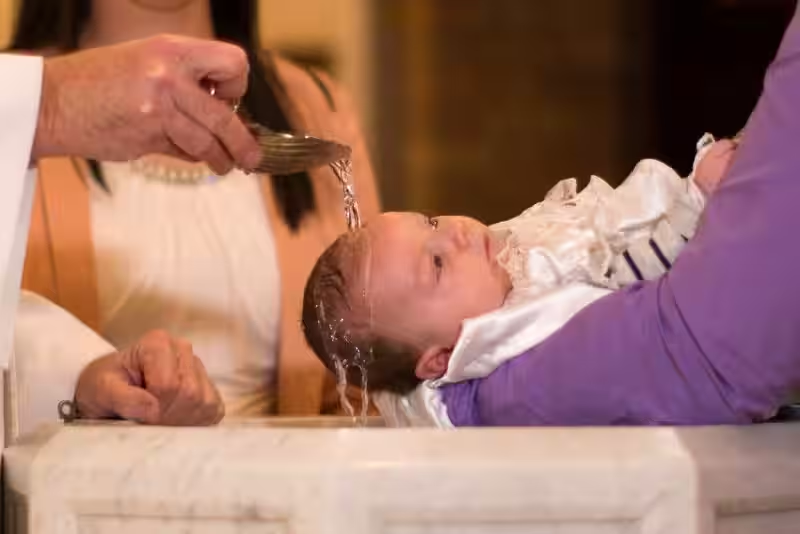
The question many Episcopalians grapple with is: how can we make baptism a more central and accessible part of our faith? The current practice often feels disconnected from the vibrant, life-changing experience it should be. This article explores a potential solution – embracing open baptism – and how it can revitalize this crucial sacrament.
- The Problem: A Diminished Sacrament
- The Solution: Embracing Open Baptism
- Addressing Potential Concerns
- Re-Prioritizing Baptism
-
Frequently Asked Questions about Open Baptism
- What is "Open Baptism"?
- Why is Open Baptism Necessary?
- How does Open Baptism address concerns about unprepared candidates?
- What are the biblical precedents for Open Baptism?
- Doesn't Open Baptism contradict traditional practices?
- How does Open Baptism relate to evangelism?
- What are some practical implications of Open Baptism?
- How does Open Baptism differ from Open Communion?
The Problem: A Diminished Sacrament
The 1979 Book of Common Prayer emphasized public baptism, yet, despite this, the sacrament has, for many, become a secondary concern. Many churches schedule baptisms infrequently, treating them as a mere administrative task rather than a profound spiritual event. The result is a diluted understanding of baptism's true significance.
This is further complicated by the growing trend of Communion Without Baptism (CWOB). While extending hospitality is commendable, offering communion without requiring baptism diminishes the unique power and meaning of baptism itself. It risks trivializing the profound act of union with Christ, reducing it to an optional formality. It's akin to offering the main course without providing the necessary foundation. The irony is striking: we readily welcome people to receive the Body and Blood of Christ, yet we often place significant barriers to participating in the very act that unites us with Christ in the first place.
The Misunderstanding of Baptism
Too often, baptism is viewed as a mere membership ritual, a marker of affiliation ("I was baptized an Episcopalian"). This perspective fundamentally misrepresents the true nature of baptism. Baptism is not simply joining a denomination; it's about joining the mystical body of Christ, transcending denominational lines and connecting believers across time and space. It's about becoming a new creation in Christ, not merely adding a name to a church roster. The focus should be on making new Christians, not on increasing membership numbers.
The Solution: Embracing Open Baptism
The solution lies in embracing a more open and accessible approach to open baptism. This means a willingness to baptize individuals whenever they express a genuine desire to follow Christ. It requires a shift from a restrictive, scheduled approach to a more spontaneous and responsive one. Imagine a church that actively seeks opportunities to celebrate baptism, rather than passively waiting for individuals to request it.
Learning from the Ethiopian Eunuch
The story of Philip baptizing the Ethiopian eunuch in Acts 8 offers a powerful example. There was no waiting list, no pre-scheduled service; the baptism happened immediately, in response to the eunuch's faith and desire. This spontaneous act of faith should serve as a model for our own approach to baptism. We should strive to emulate Philip's readiness to baptize whenever and wherever the Spirit leads.
This doesn't necessarily imply abandoning traditional services entirely. However, it does suggest a greater flexibility and willingness to celebrate baptism outside the confines of a rigid schedule. Consider the possibility of baptisms in rivers, lakes, or streams – immersing ourselves in the symbolism of water as a symbol of renewal and rebirth. Such an approach would be both a powerful witness and a more faithful reflection of the early church's practice.
Addressing Potential Concerns
Some may worry about the lack of preparation associated with impromptu baptisms. However, the church already addresses this in the practice of infant baptism, where instruction often follows the initial rite. We can adapt this model, providing catechesis and discipleship for those baptized in a more spontaneous setting. The key is not to eliminate preparation, but to re-evaluate how and when it's provided.
Furthermore, carefully crafted invitations to communion can subtly encourage participation in open baptism. Wording that emphasizes an encounter with Christ, rather than mere ritual participation, can be incredibly effective. For example, an invitation could focus on the transformative power of baptism, its role in receiving God's forgiveness and new life, inviting those who haven't experienced this to do so.
Another approach is to include in the invitation a message of support for those struggling to live out their baptismal covenant, emphasizing that the church is a place of strength and renewal for all. This addresses the underlying spiritual hunger that often leads people to seek communion without the necessary preparation.
Re-Prioritizing Baptism
Ultimately, embracing open baptism requires a fundamental shift in priorities. We must recognize that welcoming individuals to the font is more essential than adhering to inflexible schedules or maintaining a narrow definition of church membership. It's about prioritizing the crucial act of baptism over less important goals. By focusing on making disciples – welcoming individuals into a life-changing relationship with Christ through baptism – the church can truly fulfill its mission. Open baptism is not merely a procedural change; it is a profound re-commitment to the core of our faith. It is a revitalization of a central sacrament, ensuring that the transformative power of baptism reaches all who seek it. It is a return to the spirit of the Ethiopian eunuch, a spirit of immediate and joyous response to the promptings of the Holy Spirit.
Since I cannot access external websites or specific files online, including YouTube videos, I cannot provide a summary based on the content of the specified YouTube video. However, I can create an FAQ section based on the provided text about open baptism, drawing upon the arguments and points made.
Frequently Asked Questions about Open Baptism
What is "Open Baptism"?
Open baptism advocates for a more readily available and accessible approach to the sacrament of baptism. This involves moving away from restrictive scheduling and locations, and instead actively seeking opportunities to baptize individuals whenever they express a desire to follow Christ, regardless of whether they previously attended that specific church or denomination. It emphasizes the act of uniting with Christ, rather than simply adding members to a church roll.
Why is Open Baptism Necessary?
The current approach to baptism often treats it as a mere church membership ritual, downplaying its profound spiritual significance as a union with Christ. Restricting baptisms to specific times and locations hinders welcoming newcomers and contradicts the example of immediate baptism found in the Bible (e.g., the Ethiopian eunuch in Acts 8). Furthermore, the increasing practice of Communion Without Baptism (CWOB) devalues the importance of baptism, suggesting a misplaced prioritization of superficial welcome over genuine spiritual commitment.
How does Open Baptism address concerns about unprepared candidates?
Concerns about individuals being unprepared for baptism are addressed by acknowledging that infant baptism, followed by later instruction, is already a common practice. The focus should be on welcoming individuals to the font and guiding them in their faith journey, rather than setting arbitrary prerequisites that might discourage them. The emphasis is on the encounter with Christ, not adherence to strict procedural requirements.
What are the biblical precedents for Open Baptism?
The baptism of the Ethiopian eunuch in Acts 8 serves as a powerful example of spontaneous and immediate baptism outside the confines of a formal church setting. This demonstrates that baptism should be readily available to those who are ready to profess their faith in Christ.
Doesn't Open Baptism contradict traditional practices?
While some may see Open Baptism as a departure from traditional practices, proponents argue that it’s a return to a more faithful representation of Christian practice as exemplified in scripture. The focus shifts from bureaucratic control to a genuine pastoral response to individual needs and expressions of faith.
How does Open Baptism relate to evangelism?
Open Baptism can be a powerful tool for evangelism. By making baptism readily available, the church actively demonstrates its commitment to welcoming newcomers and making disciples of all nations, as mandated by the Great Commission. The accessibility of baptism can encourage individuals to take the next step in their faith journey.
What are some practical implications of Open Baptism?
Practical implications include a more flexible scheduling of baptisms, potentially including baptisms outside of traditional church settings (rivers, lakes, etc.), and revised wording for invitations to communion and baptism that emphasize the encounter with Christ and the forgiveness of sins offered through baptism. It also necessitates a renewed emphasis on catechesis and discipleship to ensure proper understanding and commitment.
How does Open Baptism differ from Open Communion?
Open Baptism focuses on making the sacrament of baptism readily available to all who desire to follow Christ, while Open Communion focuses on allowing all to partake in the Eucharist, regardless of baptismal status. Proponents of Open Baptism see it as a practical and biblically sound alternative to Open Communion, addressing the perceived devaluation of baptism.
This FAQ section provides a basic understanding of the concept of open baptism based on the provided information. More detailed answers would require further exploration of theological and practical considerations.