
Understanding Linked Verse: A Journey Through Renga
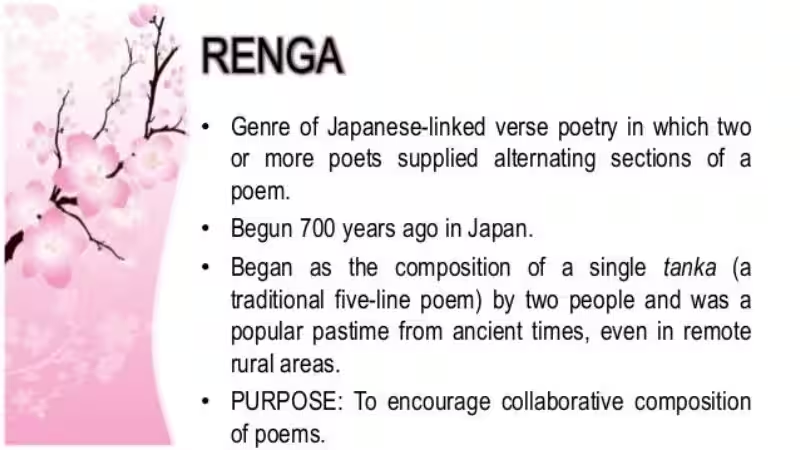
Linked verse, a captivating form of collaborative poetry, holds a rich history and offers a fascinating insight into the evolution of artistic expression. This exploration delves into the world of renga, the Japanese form of linked verse that profoundly impacted the development of haiku and other poetic traditions. Understanding its structure, rules, and historical context provides a deeper appreciation for its lasting legacy.
The Origins and Evolution of Renga
Renga, meaning "linked verses," emerged from deep within Japanese culture, its roots tracing back to ancient poetic exchanges. While some scholars propose influences from Chinese linked verse, renga quickly developed its own distinct identity. It's traditionally linked to a poetic exchange described in the Kojiki, Japan's oldest existing chronicle.
The initial form, a two-stanza tanrenga, gradually expanded to the more prevalent 100-stanza hyakuin renga. Unlike its potential Chinese counterpart, renga didn't focus on maintaining a single, unified theme throughout the entire poem. Instead, its artistry lay in the intricate connections—the subtle links—between individual stanzas. These links often involved clever wordplay, allusions, and evocative imagery, creating a dynamic flow of ideas and emotions.
Renga's Rise to Prominence: Rules and Refinement
The Heian and Kamakura periods witnessed the gradual maturation of renga. What began as a casual game among poets evolved into a sophisticated art form, demanding mastery of specific techniques. Formal rules, known as shikimoku, were established, governing various aspects of composition.
These shikimoku weren't merely constraints; they provided a framework for creativity. Specific phrases (ikku mono), seasonal words (kigo), and the repetition of themes (rinne) were carefully considered to achieve a balanced and dynamic flow (jōhakyū) throughout the entire sequence. The shikimoku ensured a certain level of complexity and elegance, reflecting the evolving sophistication of the art form. Different contexts, such as hana no moto renga (renga composed under flowers) and jige renga (underground renga), further expanded the genre's reach and adaptability.
The Golden Age and Beyond: Masters and Innovations
The Muromachi period is widely regarded as renga's golden age. The influence of poets like Nijō Yoshimoto, through his compilation of the Tsukubashū anthology and his theoretical treatises, was paramount. He elevated renga to a respected literary genre, refining its rules and aesthetics, pushing the boundaries of its potential.
Sōgi, a renowned renga master, built upon Yoshimoto's legacy, contributing significantly to the genre's development. His anthology, Shintsukubashū, and canonical sequences, such as "Three Poets at Minase" and "Three Poets at Yuyama," became landmark achievements in renga's history. His disciples continued the tradition, but the ever-increasing complexity of the shikimoku eventually contributed to the genre's decline. The sheer technical demands became a barrier to entry for many aspiring poets.
The Shift Towards Haikai No Renga
The Edo period saw a significant shift. A simpler, more accessible form of renga emerged—haikai no renga. This variant embraced colloquial language, a departure from the highly refined vocabulary of classical renga. Its lighthearted and often humorous tone made it more appealing to a wider audience.
This evolution wasn't merely a simplification; it represented a profound change in aesthetic sensibilities. The emphasis on wit and unexpected juxtapositions became central to haikai no renga. This laid the groundwork for the eventual development of haiku, with the opening stanza of renga (hokku) evolving into the independent haiku form that we know today.
The Decline and Lasting Influence
Masaoka Shiki, a prominent figure in the transition to modern Japanese poetry, contributed inadvertently to renga's decline. His declaration that renga was "not literature" reflected the broader shift towards the individualistic style favored by Western poetry. This marked a significant turning point, signaling a shift away from the collaborative nature of renga.
Despite its diminished popularity, renga's influence remains undeniable. Its collaborative spirit, sophisticated linking techniques, and emphasis on nuanced language continue to inspire poets and scholars alike. The structure, with its carefully orchestrated sequence beginning with the hokku (5-7-5 mora), followed by the waki (7-7), daisan (5-7-5), and the remaining tsukeku, culminating in the ageku, reveals a sophisticated understanding of poetic balance and flow. The shikimoku, with rules like the "four blossoms eight moons" rule, demonstrate a meticulous attention to detail. The collaborative sessions (rengakai), with a master (sōshō), scribe (shuhitsu), and participants (renju), highlight the communal aspect of this unique art form.
In conclusion, linked verse, as embodied in the rich history of renga, represents a significant chapter in Japanese literary history. Its evolution, from ancient poetic exchanges to the highly structured art form of the Muromachi period and its eventual transformation into haiku, showcases the dynamic interplay between tradition, innovation, and the ever-evolving tastes of a culture. Understanding renga provides a deeper appreciation not only for Japanese poetry but also for the broader themes of collaboration, artistic evolution, and the enduring power of poetic form.
Frequently Asked Questions about Linked Verse (Renga)
What is linked verse (Renga)?
Linked verse, or renga (連句) in Japanese, is a collaborative poetic form where multiple poets compose stanzas, alternating between 5-7-5 and 7-7 mora (sound units) in the traditional form. It's a centuries-old Japanese tradition with roots in poetic exchanges found in ancient texts, evolving from simpler two-stanza forms to more complex sequences of 100 stanzas or more. While possibly influenced by Chinese linked verse, renga developed its own distinct characteristics, particularly its focus on artful linking between stanzas rather than maintaining a single overarching theme. Later developments, such as haikai no renga, incorporated more colloquial language and a lighter tone.
How did Renga develop historically?
Renga's development spanned several historical periods in Japan. It began as a casual game, gradually evolving into a formal art form during the Heian and Kamakura periods. The Muromachi period is considered its golden age, marked by the refinement of rules (shikimoku) and the rise of influential masters like Nijō Yoshimoto and Sōgi, who further developed its aesthetics and techniques. The Edo period saw a simplification of rules, leading to haikai no renga, a more accessible form that ultimately contributed to the creation of haiku, with the first stanza (hokku) of renga becoming the independent haiku form.
What are the key structural elements of Renga?
A renga sequence typically begins with a hokku (5-7-5 mora), followed by a waki (7-7), a daisan (5-7-5), and subsequent stanzas called tsukeku, culminating in the final stanza, the ageku. The rules (shikimoku) governed various aspects, including the use of seasonal words (kigo), specific phrases (ikku mono), and the repetition of themes (rinne), aiming for a balanced and dynamic flow (jōhakyū) throughout the sequence. Different formats existed, such as kasen (36 stanzas) and han-kasen (18 stanzas).
What role did collaboration play in Renga?
Collaboration was central to renga. The process usually involved a collaborative session (rengakai) with a master (sōshō), a scribe (shuhitsu), and participants (renju). This communal aspect emphasized shared creativity and adherence to established conventions. The skill of participants was judged on their ability to create interesting and surprising connections between verses, demonstrating wit and ingenuity in linking disparate ideas.
How did Renga influence other poetic forms?
Renga's influence is profound. Its most notable contribution is the genesis of haiku. The hokku, the opening stanza of renga, evolved into the independent haiku form. While renga's popularity declined after the Edo period, its legacy in shaping subsequent Japanese poetic forms remains significant, showcasing its impact on the development of Japanese poetic traditions.