
Understanding the Concept of God Supreme
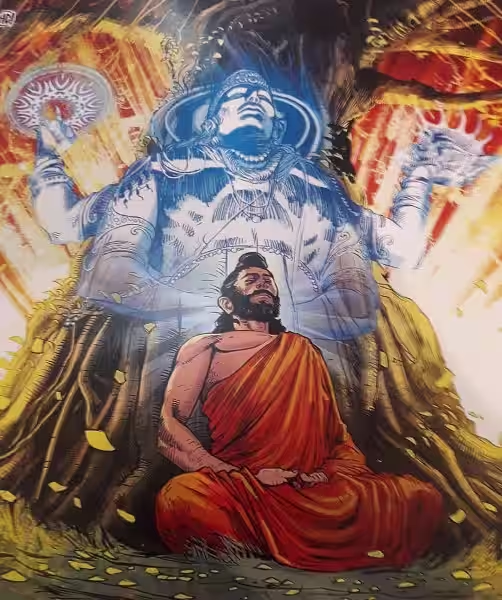
The concept of a "God Supreme" – a supreme being, ultimate deity, or highest power – is central to many religious traditions, yet its manifestation varies significantly across different belief systems. This article will explore the diverse ways this concept is understood, from the singular, all-powerful God of monotheism to the supreme deity within a pantheon of gods in polytheistic and henotheistic faiths.
- Monotheistic Understandings of God Supreme
- Polytheistic and Henotheistic Perspectives
- The Nature of Supreme Power
- The Ongoing Relevance of God Supreme
-
Frequently Asked Questions about the Supreme Deity
- What is a Supreme Deity?
- How is the Supreme Deity viewed in Monotheistic Religions?
- How is the Supreme Deity viewed in Polytheistic Religions?
- What is Henotheism, and how does it relate to the Supreme Deity?
- Are there examples of Supreme Deities across different cultures?
- Does the concept of a Supreme Deity change over time?
- What is the significance of the phrase "from him and through him and to him are all things"?
- How do hymns and religious texts reflect the concept of the Supreme Deity?
Monotheistic Understandings of God Supreme
In monotheistic religions such as Judaism, Christianity, and Islam, the belief in one God Supreme is absolute. This God is not simply the most powerful among many; rather, He is the sole creator, sustainer, and ultimate authority of all existence. This God is often described as transcendent, existing beyond the limitations of the created universe, yet also immanent, actively involved in the world and its affairs.
The attributes of this God Supreme are often described using terms like omnipotence (all-powerful), omniscience (all-knowing), and omnibenevolence (all-good). These attributes underscore the absolute power, knowledge, and goodness inherent in the single, supreme being. The relationship between humanity and this God is a key focus, emphasizing obedience, worship, and a striving for righteousness according to divine law.
Polytheistic and Henotheistic Perspectives
Polytheistic religions, in contrast, acknowledge a multitude of gods and goddesses. However, even within these belief systems, the concept of a supreme deity frequently arises. This supreme being, often referred to as the "king of the gods" or a similar title, holds a position of preeminence within the pantheon. This doesn't necessarily mean this supreme god possesses ultimate power over all aspects of creation; rather, he or she holds the highest rank within the divine hierarchy, often associated with creation, cosmic order, or justice.
Henotheism presents a fascinating middle ground. While acknowledging the existence of multiple gods, henotheism focuses devotion primarily on a single, supreme god. This supreme god is not necessarily considered the only god, but rather the most worthy of worship and the focus of religious practice. This approach allows for a recognition of other deities without compromising the central allegiance to one supreme being. The choice of which deity to elevate to this supreme position varies widely across henotheistic traditions.
Examples of Supreme Deities Across Cultures
Examples of supreme deities abound across various cultures and historical periods. In Greek mythology, Zeus reigns supreme, wielding considerable power and influence over the Olympian gods and the cosmos. Similarly, Jupiter, his Roman equivalent, holds the highest position in the Roman pantheon. These supreme beings embody power, justice, and control over the natural world, yet other gods and goddesses retain their individual roles and responsibilities within the broader divine structure.
African traditional religions also feature a wide range of supreme deities, often creator gods who maintain significant power and influence over the natural world and human affairs. The specific characteristics and roles of these deities vary considerably across different cultures and communities, reflecting the diversity of African spiritual traditions. Similarly, in Hinduism, the concept of Brahman encompasses all reality, serving as a supreme, ultimate reality that underlies all existence and from which all things emanate. This is a different kind of "supreme" than a ruling king of the gods, but it is still a concept of an ultimate, unifying power.
The Nature of Supreme Power
The concept of a "God Supreme" inherently involves the idea of ultimate power and authority. However, the nature of this power and how it's exercised differs greatly depending on the theological framework. In monotheism, the supreme deity possesses absolute power, capable of anything. In polytheistic systems, the supreme deity's power may be significant within the pantheon, but it might be limited by the powers and roles of other divine beings.
Regardless of the specific theological context, the idea of a God Supreme often carries implications for morality, ethics, and the purpose of human existence. The actions and will of the supreme deity are often seen as the ultimate standard against which human behavior is judged, leading to a wide range of beliefs and practices surrounding worship, ritual, and moral codes.
The Ongoing Relevance of God Supreme
The concept of a God Supreme continues to hold profound significance for individuals and societies worldwide. Whether understood as a singular, all-powerful God or as the paramount deity within a larger divine hierarchy, the belief in a supreme being provides meaning, purpose, and a framework for understanding the world and one's place within it. The way different cultures and religions interpret and express their belief in a God Supreme remains a rich and fascinating area of study, reflecting the diversity of human spiritual experience. The question of a God Supreme, and the nature of that supreme being, remains a central and enduring question for humanity.
Frequently Asked Questions about the Supreme Deity
What is a Supreme Deity?
The concept of a "supreme deity," "supreme god," or "supreme being" refers to the ultimate divine entity within a religious framework. This isn't a single, universally defined entity but a concept that takes different forms across various belief systems. In some religions, it's a singular, all-powerful God, the sole creator and ultimate authority. In others, it's a primary deity within a larger pantheon of gods and goddesses, holding a position of preeminence but not necessarily exclusive power.
How is the Supreme Deity viewed in Monotheistic Religions?
In monotheistic religions like Judaism, Christianity, and Islam, the supreme deity is understood as a single, all-powerful God, the sole creator and ultimate authority. This God is often described as transcendent (existing outside of creation) and immanent (actively involved in the world), possessing attributes like omnipotence (all-powerful), omniscience (all-knowing), and omnibenevolence (all-good).
How is the Supreme Deity viewed in Polytheistic Religions?
Polytheistic religions feature multiple gods and goddesses. Here, the supreme deity is typically a "king of the gods" or a paramount deity holding a position of preeminence within the pantheon. This doesn't mean they are the only god, but rather the most powerful or influential. Their specific characteristics and powers vary significantly across different polytheistic traditions.
What is Henotheism, and how does it relate to the Supreme Deity?
Henotheism is a variant of polytheism. While acknowledging multiple gods, it emphasizes the worship of a single, supreme god above all others. This supreme god isn't necessarily considered the only god, but the most worthy of devotion and the primary focus of religious practice.
Are there examples of Supreme Deities across different cultures?
Yes. Abrahamic religions offer a clear example with their singular, all-powerful God. African traditional religions often feature creator gods with significant power and influence. In Hinduism, Brahman is a supreme concept encompassing all reality. Ancient Greek and Roman religions had Zeus and Jupiter, respectively, as the kings of their pantheons. The common thread is the recognition of an ultimate divine entity, however defined, holding supreme power or influence within the religion's cosmological framework.
Does the concept of a Supreme Deity change over time?
Yes, the concept of a supreme deity is not static. It adapts and evolves according to the specific beliefs and structures of different religious systems and across different historical periods. The attributes, functions, and even the very nature of the supreme being can vary significantly.
What is the significance of the phrase "from him and through him and to him are all things"?
This phrase, often cited in religious contexts, emphasizes the supreme deity's role as the origin, sustainer, and ultimate goal of all things. It highlights the deity's complete control and influence over existence, past, present, and future.
How do hymns and religious texts reflect the concept of the Supreme Deity?
Hymns and religious texts often express reverence and adoration for the supreme deity, reflecting the beliefs and values of specific religious traditions. They can depict the deity's attributes, actions, and relationship with humanity, often using metaphor, allegory, and poetic language to convey complex theological ideas. The emotional responses evoked by these texts, such as awe, fear, love, or hope, vary depending on the specific religious context and the individual's faith. They also may reflect the struggles and triumphs of faith in a world perceived as both good and broken.