
Unleashing Your Child's Mighty Mind: The Power of Playful Learning
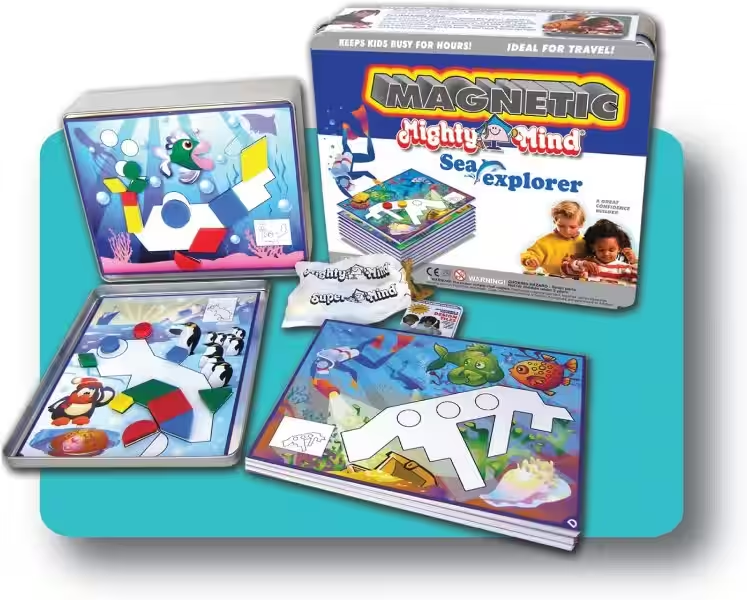
Unlocking a child's full potential is a journey filled with exciting possibilities. Parents constantly search for effective ways to nurture their children's cognitive growth, fostering skills that will serve them well throughout life. One approach gaining traction involves harnessing the power of play, transforming learning into an engaging and enjoyable experience. This article explores how playful learning can cultivate a mighty mind in your child.
The Importance of Play in Cognitive Development
Play isn't just fun; it's crucial for a child's intellectual development. Through play, children explore the world around them, experiment with different ideas, and develop crucial problem-solving skills. It's a natural process, a bridge between exploration and learning. The unstructured nature of free play allows children to develop their creativity, imagination, and social skills.
Structured play, however, offers a focused approach to learning. Educational games and activities can target specific cognitive skills, such as memory, attention, and critical thinking, all in a fun and interactive way. This targeted approach can supplement a child's natural learning process, accelerating their cognitive development.
Cognitive Skills Enhanced Through Play
Several cognitive functions significantly benefit from playful learning experiences. These include:
- Problem-solving: Engaging puzzles and games challenge children to think critically, devise strategies, and overcome obstacles, strengthening their analytical abilities.
- Creativity: Open-ended play encourages imaginative thinking and allows children to express their ideas freely, fostering innovation and originality.
- Memory: Games that involve memorization, recall, and sequencing improve a child’s ability to retain information and retrieve it when needed.
- Focus and Attention: Structured play activities can enhance focus and attention spans by requiring children to concentrate on a specific task, improving their ability to concentrate on schoolwork and other activities.
- Spatial reasoning: Activities involving shapes, patterns, and spatial relationships enhance a child’s ability to visualize and manipulate objects mentally.
Mighty Mind Games: A Powerful Tool for Cognitive Growth
Many educational games are designed to specifically target cognitive development, and Mighty Mind Game is a prime example. This game uses a set of colorful tiles and design cards to challenge children to recreate images. This seemingly simple activity fosters a surprisingly wide range of cognitive skills.
The process of assembling the puzzle naturally encourages counting, sorting, and categorization. Children must select and arrange tiles based on color, shape, and size, developing crucial fine motor skills and hand-eye coordination. The game’s progressive difficulty levels provide a personalized learning experience. Early puzzles offer color-coded clues to help younger players, building confidence before they tackle more complex challenges.
Beyond the Tiles: The Broader Benefits
The benefits of Mighty Mind Game extend beyond the immediate skills involved in building the puzzles. The game cultivates perseverance and problem-solving skills as children grapple with increasingly difficult designs. This fosters a growth mindset, encouraging them to approach challenges with confidence and determination. The social aspects of playing with others—whether collaboratively or competitively—improve communication and teamwork.
Moreover, the visual appeal of the colorful tiles and engaging designs keeps children motivated and engaged. This intrinsic motivation is essential for effective learning; when children enjoy the process, they are more likely to persist and achieve mastery. The game's adaptive nature, adjusting to the child's skill level, ensures that the challenge remains appropriate and rewarding, promoting a sense of accomplishment and boosting self-esteem.
Integrating Playful Learning into Daily Life
Incorporating playful learning into your child’s daily routine doesn't require extensive effort or specialized resources. Simple activities, such as building blocks, drawing, storytelling, and board games, can significantly contribute to cognitive development. The key is to create a fun and engaging environment where learning feels natural and enjoyable.
Look for opportunities to transform everyday tasks into learning experiences. For example, while grocery shopping, you can ask your child to help categorize items, count quantities, or read labels. During meal preparation, they can assist with measuring ingredients or sorting vegetables. These seemingly mundane tasks become opportunities for learning and cognitive development.
Parental Engagement: A Key Factor
Parental involvement is crucial for maximizing the benefits of playful learning. Engage in activities with your child, participate in their games, and provide encouragement and support. Your active participation validates their efforts, builds their confidence, and creates positive associations with learning. Ask open-ended questions to encourage critical thinking and problem-solving. Celebrate their achievements and offer constructive feedback when they encounter challenges. By creating a supportive and stimulating environment, you empower your child to unlock their full potential and develop a mighty mind. The combination of structured learning tools like Mighty Mind Game and the natural, playful interactions you share will help your child flourish.
Mighty Mind Game: Frequently Asked Questions
What is Mighty Mind Game?
Mighty Mind Game is a fun and educational problem-solving game designed to boost cognitive skills in children. It uses 32 colorful plastic tiles and 30 design cards to challenge players to recreate images, fostering creativity and spatial reasoning.
What skills does Mighty Mind Game develop?
The game enhances several key skills, including:
- Spatial Reasoning: Players develop their ability to visualize and manipulate objects in space.
- Problem-Solving: Children learn to analyze challenges and devise solutions strategically.
- Creativity: The open-ended nature of some puzzles encourages inventive thinking.
- Fine Motor Skills: Manipulating the tiles improves hand-eye coordination and dexterity.
- Counting, Sorting, and Categorization: These skills are naturally integrated into the puzzle-solving process.
How does the game work?
Players use the colored tiles to recreate images shown on the design cards. The cards are organized by increasing difficulty, starting with color-coded clues for beginners and progressing to more complex, un-clued challenges.
What age range is Mighty Mind Game suitable for?
The game's adaptable difficulty makes it suitable for a range of ages. Younger children can benefit from the easier, color-coded puzzles, while older children will be challenged by the more complex designs.
What makes Mighty Mind Game unique?
Its unique combination of engaging gameplay and educational benefits makes it stand out. The gradual increase in difficulty allows for personalized learning, ensuring children are consistently challenged and rewarded.
Is Mighty Mind Game durable?
Yes, the game is made with durable plastic tiles designed to withstand repeated use.
Where can I purchase Mighty Mind Game?
[Insert information about where the game can be purchased, e.g., online retailers, specific stores]
Does Mighty Mind Game require adult supervision?
While not strictly required, adult supervision can be beneficial, particularly for younger children, to assist with understanding the rules and provide guidance if needed. The game is designed to be largely self-directed once the basic rules are understood.