
Unpacking Moses' Identity: A Journey of Self-Discovery
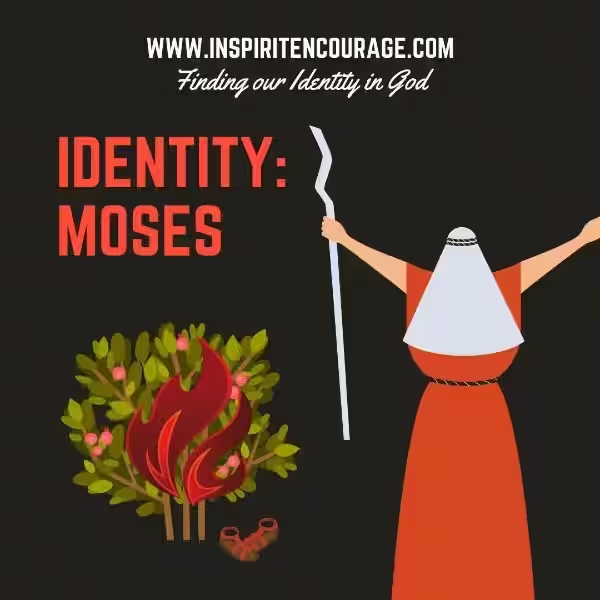
The story of Moses is far more than a historical account; it's a powerful narrative about identity formation, a journey many of us can relate to on a deeply personal level. Understanding Moses' identity isn't just about deciphering his historical role; it's about understanding the internal struggles he faced and the profound transformation he underwent. This exploration will delve into the complexities of Moses' identity, examining his internal conflicts, his relationship with God, and the lessons we can glean from his remarkable life.
- The Fragmented Self: Moses' Early Life and Identity Crisis
- The Pivotal Question: "Who Am I, God?"
- God's Perspective: Shaping Identity Beyond Human Limits
- Moses' Identity and Modern Parallels: Finding Self-Worth in God
- Rediscovering Your Identity: A Dance with God
- Frequently Asked Questions: Moses' Identity
The Fragmented Self: Moses' Early Life and Identity Crisis
Moses' early life was marked by a profound sense of displacement and uncertainty. Raised in the opulent surroundings of Pharaoh's court, he enjoyed privilege and power, yet he was fundamentally a Hebrew, a member of a people enslaved and oppressed. This inherent duality created a deep internal conflict, a fractured sense of self that mirrored the divided nature of his world. He was both insider and outsider, privileged and oppressed, simultaneously experiencing the comforts of power and the pangs of knowing his true heritage.
This internal tension didn't simply disappear as he grew older. It created an uncertainty about his place in the world, fueling a sense of not truly belonging anywhere. The lack of a strong, unified identity likely contributed to his initial hesitation and ultimately, his failure, in his first attempt to liberate the Israelites. He acted impulsively, without a clear understanding of either his own strengths or the deep-seated needs of his people. This initial setback underscores a crucial point: true identity isn't solely defined by external achievements or societal roles.
The Pivotal Question: "Who Am I, God?"
Moses' iconic encounter with the burning bush marks a turning point in his life. His question, "Who am I, that I should go unto Pharaoh?" encapsulates the heart of his identity crisis. It's a cry of self-doubt, a question that resonates with anyone who's ever felt inadequate or uncertain of their purpose. This seemingly simple question becomes pivotal because it represents the first step in a profound journey of self-discovery—a journey that leads him away from relying on external validation to finding his identity in God.
This wasn't a simple declaration of faith; it was a genuine wrestling with his own limitations and insecurities. By asking this profound question, Moses implicitly acknowledges his own insufficiency and seeks God's perspective, acknowledging that his true identity is not to be found in his own understanding, but in a relationship with the Divine. This humbling act of vulnerability is the key to unlocking God's plan for his life.
God's Perspective: Shaping Identity Beyond Human Limits
Unlike family, society, or even our own self-perception, God possesses a complete picture of our potential and purpose. Psalm 139 beautifully illustrates this truth: God knows us intimately, from our creation in the womb to our divinely ordained future. This perspective is crucial in understanding Moses' identity. His seemingly disparate experiences—his education in Pharaoh's court, his rejection by both his Egyptian family and his Hebrew brethren—weren't random occurrences; they were part of God's intricate plan to shape him for his ultimate calling.
Moses' upbringing in Pharaoh's court, for instance, provided him with invaluable skills and knowledge. His education in governance and warfare equipped him to lead the Israelites out of slavery. These experiences, while seemingly contradictory to his Hebrew identity, became integral to his development as a leader. God used seemingly disparate circumstances to shape Moses' identity, demonstrating His unique ability to weave together seemingly disconnected threads to create a unified and purposeful whole. This is a powerful reminder that even our struggles and perceived failures can be part of God's overarching plan.
Moses' Identity and Modern Parallels: Finding Self-Worth in God
Moses' struggles with identity are not unique to ancient history. Many people today grapple with similar feelings of inadequacy and self-doubt stemming from criticism, discouragement, or a misplaced reliance on external validation. Whether it's harsh feedback from a teacher, pressure from peers, or the disappointment of a parent, many individuals find their sense of self-worth tied to external approval. This pursuit of external validation ultimately leaves us feeling empty and unfulfilled.
The core message from Moses' story is that true affirmation and belonging are found not in human approval, but in a relationship with God. This is a fundamental truth that transcends time and culture. Our identity is not defined by our accomplishments, our failures, or the opinions of others. It's rooted in our relationship with God, in His unconditional love and acceptance. This is a crucial insight for anyone struggling to find their place in the world.
Rediscovering Your Identity: A Dance with God
Overcoming feelings of inadequacy and self-doubt is a journey, not a destination. It's a continuous process of actively seeking God's truth, replacing negative self-perceptions with His affirmation. This can be thought of as a "dance" between the individual and God, a dynamic interaction where God's truth gradually transforms our self-perception.
This journey involves replacing the "old script" of self-doubt with a new song of self-acceptance and purpose. It's about embracing God's unique plan for our lives, recognizing that our true identity is found not in worldly achievements or human approval, but in a divinely ordained purpose. Moses’ identity, ultimately, wasn't determined by his upbringing or his initial failures; it was forged in his relationship with God, a relationship that provided him with the strength, courage, and purpose to lead his people to freedom. The journey to understanding Moses' identity helps us unlock a similar journey within ourselves.
Frequently Asked Questions: Moses' Identity
What were the key challenges Moses faced in forming his identity?
Moses' identity was complex and shaped by conflicting experiences. Raised in Pharaoh's court, he enjoyed privilege and power, yet he was a Hebrew, a people enslaved by Egypt. This dual heritage created internal conflict and a sense of displacement. Furthermore, his initial attempt to liberate the Israelites failed, leaving him feeling inadequate and questioning his self-worth. He lacked a clear understanding of his people's needs and his own capabilities.
How did Moses' understanding of his identity evolve?
Moses' journey of self-discovery began with a crucial question: "Who am I, God?". This marked a pivotal shift from relying on external validation (his Egyptian upbringing and initial leadership attempt) to seeking God's perspective. Through this seeking, he came to understand that his true identity wasn't defined by his upbringing or achievements but by his relationship with God. God's intimate knowledge of him, as reflected in Psalm 139, revealed his divinely ordained purpose.
What role did God play in shaping Moses' identity?
God played a crucial role, using even seemingly disparate experiences to shape Moses' identity for His purposes. His upbringing in Pharaoh's court provided him with essential skills in governance and warfare, vital for leading the Israelites. Even the rejection he faced from both his Egyptian family and his Hebrew brethren served God's plan, pushing Moses to rely on God for affirmation and direction. God’s complete knowledge of Moses' potential and purpose provided the ultimate foundation for his identity.
How can Moses' struggles relate to contemporary individuals?
Many people today face similar struggles in forming their identity. Criticism from family, peers, or mentors can lead to feelings of inadequacy and self-doubt, causing a reliance on external validation for self-worth. Moses' experience highlights the universal human struggle to find one's place and purpose, emphasizing that true identity and belonging are not found in worldly achievements or human approval but in a relationship with God.
What is the ultimate message regarding Moses' identity?
The ultimate message is that true identity is found not in external validation or achievement, but in a relationship with God. Overcoming feelings of inadequacy requires actively seeking God's perspective and replacing negative self-perceptions with His affirmation. This is a personal journey, a "dance" between the individual and God, where God's truth gradually transforms self-perception, leading to self-acceptance and a sense of divinely ordained purpose. This ultimately leads to fulfillment and a life lived in accordance with God's plan.