
Declare, Decree, and Prayer: Understanding Spiritual Authority
This article explores the nuanced relationship between prayer, declaration, and decree within a Christian context, drawing on both scriptural understanding and personal experience. It aims to clarify these often-intermingled concepts and highlight the vital role of responsible spiritual practice.
- Prayer: The Foundation of Intimacy
- Declaration: Partnering with God's Promises
- Decree: Exercising Authority with Discernment
- The Interconnectedness of Prayer, Declaration, and Decree
-
The Importance of Scriptural Understanding and the Accessibility of Spiritual Gifts
- What is the difference between prayer, declaration, and decree within a Christian context?
- What biblical basis supports the practice of declaration?
- How does decreeing differ from declaration?
- Are there any cautions regarding decreeing?
- What is the role of scripture in prayer, declaration, and decree?
- Does everyone have the ability to declare and/or decree?
- How do faith and intimacy with God relate to these practices?
- Can these practices be misused?
- What is the ultimate goal of prayer, declaration, and decree?
Prayer: The Foundation of Intimacy
Prayer forms the bedrock of our relationship with God. It's a multifaceted conversation encompassing supplication, thanksgiving, intercession, and communion. We petition God for our needs, express gratitude for His blessings, intercede on behalf of others, and enjoy a deep fellowship with our Creator. The Bible encourages continuous prayer – "pray without ceasing" (1 Thessalonians 5:17) – emphasizing the ongoing nature of this vital connection.
However, effective prayer requires discernment. Our petitions must align with scripture, reflecting God's character and respecting both His sovereignty and the free will He has granted to humanity. We are not to manipulate God into fulfilling our desires, but rather to humbly seek His will and guidance.
Declaration: Partnering with God's Promises
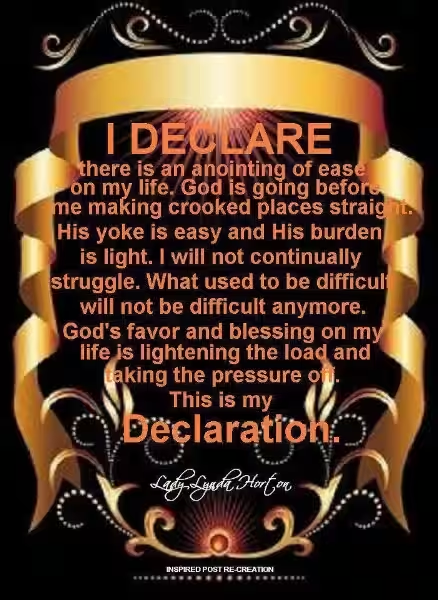
Declaration differs from prayer in its focus. Instead of requesting something new, a declaration affirms what God has already promised or established. It's an act of partnering with God, releasing His pre-ordained blessings into the world. This often involves speaking aloud scriptural promises or prophetic insights, believing that God will fulfill His word. For example, declaring healing based on Isaiah 53:5 or declaring provision based on Philippians 4:19.
Declarations, like prayers, must remain tethered to scripture and God's character. They aren't a mechanism to force God's hand, but a confident expression of faith in His promises. It's about aligning our words with His already-established truth.
Decreeing, unlike prayer and declaration, involves issuing commands or establishing something new. This action requires a basis of inherent authority. This authority can stem from various legitimate sources, such as legal positions held in government or within a church structure (for example, a pastor ordaining another pastor). Job 22:28 speaks to this legitimate decreeing: "You will also decree a thing, and it will be established for you; and light will shine on your ways."
However, illegitimate decreeing, often characterized by attempts to manipulate or control others against their will, is dangerous and akin to witchcraft. It's the misuse of authority, lacking a foundation in divine sanction or legitimate human authority. Discernment is critical; every believer must carefully weigh the source and nature of any decree.
The Interconnectedness of Prayer, Declaration, and Decree
These three forms of spiritual communication are not mutually exclusive; they are interconnected. A deep understanding of scripture allows for a fluid movement between them. Recognizing a fulfilled prophecy or promise might naturally lead from prayer to declaration. The key element unifying all three is faith, nurtured through intimate fellowship with God and a deep understanding of His word.
Each requires a reliance on the Holy Spirit's guidance. This isn't about self-reliance or manipulation, but about aligning our words and actions with God's will, respecting free will, and upholding the established covenants. The true power lies not in the act of declaring or decreeing itself, but in our obedience to God and our trust in His sovereign plan.
The Importance of Scriptural Understanding and the Accessibility of Spiritual Gifts
As believers, we all possess the ability to hear God's voice and utilize spiritual gifts, including prophecy (1 Corinthians 12; John 10:27-28; John 14:12). This is not limited to a select few but is a privilege and responsibility granted to all who follow Christ. Therefore, a thorough understanding of scripture is paramount, equipping us to discern God's will and use these spiritual gifts responsibly in prayer, declaration, and decree. The goal isn't to control outcomes, but to partner with God in fulfilling His purposes. To declare and decree effectively requires a foundation of deep faith, consistent prayer, and a profound knowledge of God's word and His character.
Here's an FAQ section addressing the distinctions between prayer, declaration, and decree, based on the provided information. Note that the answers are synthesized from the provided text and avoid direct quoting.
What is the difference between prayer, declaration, and decree within a Christian context?
Prayer is a foundational conversation with God, encompassing requests, thanksgiving, intercession, and communion. It's a continuous process of connecting with God, seeking His guidance and sharing our hearts. Declarations affirm what God has already promised, partnering with Him to bring His promises to fruition. They are based on scriptural promises or prophetic insight. Decreeing, however, involves issuing commands or establishing something new, based on inherent authority, whether legal or divinely granted within a church structure.
What biblical basis supports the practice of declaration?
Declarations find support in scriptures that detail God's promises. By declaring these promises, we align ourselves with God's will and actively participate in His work. The practice is rooted in the belief that God's promises are active and available for His people to claim. Specific scriptural references would need to be examined in context to understand their application.
How does decreeing differ from declaration?
While declarations affirm existing promises, decreeing involves issuing commands or establishing something new. Declarations partner with God's existing work, while decreeing involves exercising authority to bring about a specific outcome. Only individuals with legitimate authority—be it legal or spiritually ordained—should engage in decreeing.
Are there any cautions regarding decreeing?
Yes, the misuse of decreeing is cautioned against. Exercising authority without proper authorization or against someone’s will is considered illegitimate and potentially harmful. The emphasis is on responsible and righteous exercise of any authority, aligned with God's character and will.
What is the role of scripture in prayer, declaration, and decree?
Scripture serves as a guide and foundation for all three. Prayer should align with God's will as revealed in scripture. Declarations are based on specific promises found in scripture. Decreeing should be exercised according to scriptural principles and within the bounds of divinely granted authority. A deep understanding of scripture is vital for engaging in these practices responsibly.
Does everyone have the ability to declare and/or decree?
The ability to pray is considered universal among believers. Declaration is accessible to all believers who understand and trust God's promises. However, decreeing requires a specific level of authority, whether legal or spiritually ordained within a church structure. Not everyone holds such authority.
How do faith and intimacy with God relate to these practices?
Faith is essential for all three practices. Intimacy with God, cultivated through prayer and consistent engagement with His word, is key to discerning His will and exercising these spiritual practices responsibly. It enables believers to hear God's voice and understand the appropriate context for each practice.
Can these practices be misused?
Yes, all three practices can be misused. Prayer can become self-centered or manipulative. Declarations can be based on misinterpretations of scripture or personal desires. Decreeing can be exercised without proper authority, resulting in harmful consequences. Therefore, a strong foundation in scripture and a deep relationship with God is crucial to avoid misuse.
What is the ultimate goal of prayer, declaration, and decree?
The ultimate goal is to align oneself with God's will and participate in His work in the world. These practices are intended to foster a deeper relationship with God and to bring about His purposes, not to manipulate outcomes according to personal desires. Submission to God's will is paramount.