
Who Was Esther's Husband? Unpacking the Story of Esther and Ahasuerus
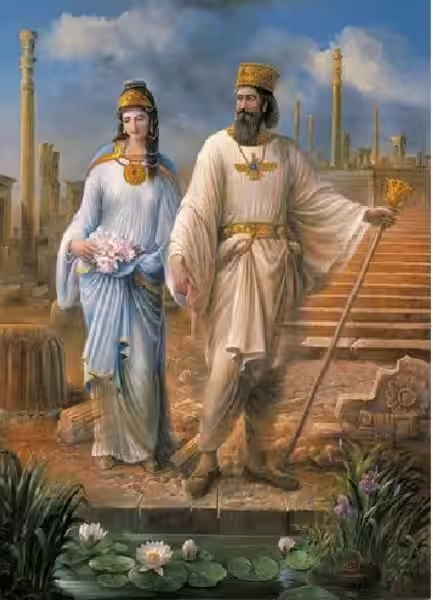
The question "Who was Esther's husband?" has a simple answer: King Ahasuerus, also known as Xerxes I, the powerful king of Persia. However, the relationship between Esther and her husband is far more complex than a simple marital union. It forms the dramatic backdrop to a story of faith, courage, and divine intervention, significantly enriching our understanding of the Book of Esther.
Ahasuerus: The King and the Context
Ahasuerus, as depicted in the Book of Esther, was a ruler of immense power and influence, presiding over a vast empire. His personality is portrayed as capricious and prone to impulsive decisions, traits that significantly impact the unfolding narrative. His extravagant lifestyle and the scale of his kingdom underscore the magnitude of the threat to the Jewish people orchestrated by Haman and the significance of Esther’s actions.
The Book of Esther provides limited information about the personal dynamics between Esther and Ahasuerus. Their marriage is presented as a political arrangement, with Esther, a Jewish orphan, elevated to queen through a beauty contest. Yet, this marriage is not simply a chance occurrence. Midrashic literature, which expands upon the biblical account, suggests that this elevation was divinely orchestrated, fulfilling God's plan to save the Jewish people. This perspective frames their relationship within a larger divine framework.
Beyond the Biblical Narrative: Midrashic Insights into Esther's Husband
Midrashic literature offers fascinating insights into the couple's relationship, enriching the biblical narrative with details about Esther's inner struggles and the divine intervention that shaped her actions. While the biblical text states that Esther was "greatly agitated" upon learning of Haman's decree, midrashic traditions paint a far more visceral picture. These traditions depict her experiencing physical manifestations of her distress, ranging from miscarriage (Erez Israel tradition) to menstrual bleeding (Babylonian tradition). These accounts highlight the overwhelming emotional and spiritual burden she carried.
Esther's Internal Conflict and Personal Sacrifice
The midrash also delves into Esther's internal conflict. Her fear of approaching Ahasuerus, detailed in her conversation with Mordecai, is interpreted in the Babylonian tradition as a fear of losing her status as his wife—a profound personal sacrifice she was willing to make. Her famous declaration, "and if I am to perish, I shall perish," (Esther 4:16) is thus understood not just as a selfless act for her people, but also as a potential transgression against her marital status and religious obligations. This adds a layer of complexity to her actions, highlighting her profound personal commitment.
Prayer, Fasting, and Divine Assistance
Esther's actions are framed within a context of intense prayer and fasting. She undertakes a three-day fast, even overlapping with Passover, demonstrating the depth of her commitment. The midrash details her prayers, revealing a humble supplication to God, emphasizing her orphan status and drawing parallels to the Israelites' plight in Egypt. This piety is further underscored by the mention of her adherence to halakha (Jewish law) regarding hallah, niddah (ritual purity), and Sabbath candles, even within the opulent setting of the royal palace. These details paint a picture of a deeply righteous and faithful woman.
Esther's Journey to the King: A Perilous Path
The midrashic accounts further embellish Esther's journey to Ahasuerus, depicting it as a perilous obstacle course fraught with danger from courtiers hoping for her downfall and Haman’s sons. The narrative describes miraculous interventions: the protection from sorcery, the turning of Ahasuerus's head by ministering angels to overcome his reluctance, and the enhancement of Esther’s appearance by three angels. These embellishments underscore the extraordinary circumstances surrounding her decision and highlight the profound divine assistance she received.
The narrative also details the departure of divine inspiration before her audience with the king, causing her to further pray and recite Psalm 22, interpreted allegorically as her lament. Different traditions vary the timing of this psalm recitation, highlighting the despair and the seeming abandonment she felt during this critical period.
Beyond the Immediate Crisis: Esther's Life After Ahasuerus
While the Book of Esther focuses on Esther's crucial intervention in thwarting Haman's plot, the midrashic literature offers no details about Esther's life after this pivotal event. The historical record is likewise silent. Xerxes I, Esther's husband, was assassinated, leaving Esther's position uncertain and vulnerable. His successor, Artaxerxes I, was Vashti's son, which created a potentially fraught dynamic for Esther, who came from a lower social standing and a different background. The possibilities range from a continued life of influence to a life of vulnerability and even potential danger. The silence of history leaves room for speculation and invites reflection on the enduring power of her story.
Ultimately, the relationship between Esther and Ahasuerus, as presented in the Book of Esther and expanded upon in midrashic literature, serves as a powerful and enduring testament to faith, courage, and divine providence. It is a story that transcends its historical context, resonating across generations with its timeless themes of perseverance and the potential for extraordinary impact from seemingly ordinary individuals.
Frequently Asked Questions about Esther's Husband
Who was Queen Esther's husband?
Queen Esther's husband was King Ahasuerus, also known historically as Xerxes I, the king of Persia. This is explicitly stated in the Book of Esther, a canonical text in both Jewish and Christian scriptures. His reign provides the historical backdrop for the events described in the book.
What was the nature of Esther and Ahasuerus's relationship?
The Book of Esther doesn't delve deeply into the personal aspects of their relationship. Their marriage was primarily a political arrangement, with Esther, a Jewish orphan, becoming queen through a selection process. While the text doesn't detail a romantic connection, it highlights the strategic importance of their marriage for the narrative. Esther's position as queen allows her to access the king and intervene in the plot against the Jewish people.
How did their relationship impact the story of Esther?
Esther's marriage to Ahasuerus is crucial to the plot. Her position as queen granted her the authority and opportunity to approach the king and plead for the lives of her people. Without this marriage, she would not have had the access necessary to prevent the genocide planned by Haman. The story uses their relationship as a framework to emphasize Esther's courage, her faith, and the power of divine intervention.
What do Midrashic sources add to our understanding of Esther and Ahasuerus's relationship?
Midrashic literature, while not part of the biblical text itself, expands on the biblical narrative. It offers insights into Esther's internal struggles and the potential personal sacrifices she made. Some midrashic traditions suggest that Esther feared potential repercussions to her status as queen due to her actions to save her people. These interpretations enrich the understanding of the weight of her decision and emphasize the depth of her faith. However, it's important to note that these are interpretations and not direct statements from the biblical account.
What happened to Esther after Ahasuerus's death?
The biblical Book of Esther does not detail Esther's life after Ahasuerus's death. Historical accounts are silent on her fate. This lack of information allows for various interpretations and underscores the enduring mystery surrounding Esther's life beyond the events narrated in the book. Different extra-biblical sources offer speculation, but there's no definitive historical or scriptural record.