
Jesus' Agony in Gethsemane: A Deeper Look into His Suffering
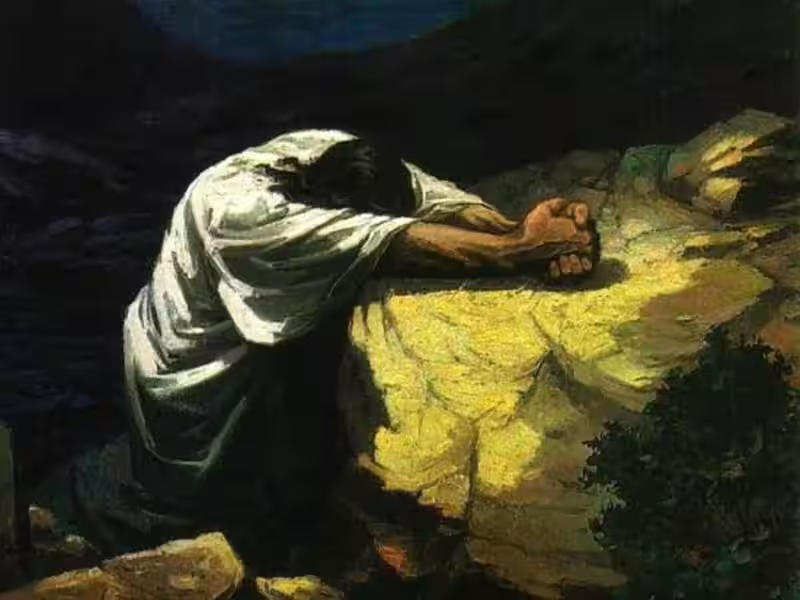
The Garden of Gethsemane. The very name evokes images of profound sorrow, intense struggle, and unwavering faith. But what exactly happened during Jesus' agony in Gethsemane, and what is its significance for Christians today? This article explores the events of that night, examining the historical accounts, theological interpretations, and lasting impact of Jesus' profound suffering.
- The Historical Accounts: A Night of Intense Prayer and Struggle
- Theological Interpretations: Unveiling the Depth of Jesus' Agony
- Jesus' Agony in Gethsemane and Christian Devotion
- Artistic Representations and Lasting Impact
-
Frequently Asked Questions: Jesus' Agony in Gethsemane
- What happened in the Garden of Gethsemane?
- Why is the Agony in Gethsemane significant in Christian theology?
- What is the significance of Jesus' "sweating blood"?
- What is the "cup" Jesus refers to in his prayer?
- How does the Agony in Gethsemane relate to the Holy Hour?
- What theological interpretations exist regarding the Agony?
- How is the Agony in Gethsemane depicted in art?
- What is the significance of the disciples' sleep in the narrative?
The Historical Accounts: A Night of Intense Prayer and Struggle
The Gospels of Matthew, Mark, and Luke all describe Jesus' withdrawal to Gethsemane with three of his disciples: Peter, James, and John. Following the Last Supper, Jesus felt the weight of what lay ahead – his crucifixion and the salvation of humanity. He asked his disciples to pray while he went a short distance away, expressing an unparalleled anguish.
The accounts emphasize the intensity of Jesus' emotional and spiritual turmoil. His prayer, repeated three times, pleads for the "cup" of suffering to pass him by, but ultimately submits to God's will ("Your will be done"). This showcases a profound internal struggle, a human desire to avoid suffering juxtaposed with a divine acceptance of his destined path. Luke's Gospel uniquely adds a physical manifestation of this agony: "His sweat became like drops of blood falling to the ground" (Luke 22:44). This detail, often interpreted as hematidrosis, highlights the physical toll of Jesus' emotional distress.
The disciples, despite Jesus' plea for vigilance, fell asleep, underscoring his profound loneliness during this critical moment. This human frailty contrasts starkly with Jesus' unwavering strength and obedience to God's plan. The presence of an angel, mentioned in Luke's Gospel, offers a comforting yet poignant contrast to the surrounding darkness and despair.
Theological Interpretations: Unveiling the Depth of Jesus' Agony
The "cup" mentioned in Jesus' prayer is a central point of theological discussion. It's generally understood to symbolize the suffering and death he was about to endure. However, the depth of his agony goes beyond mere physical pain. Theological interpretations explore several aspects:
- The Weight of Humanity's Sins: Jesus bore the burden of the sins of the world, a weight that crushed his spirit and soul. This immense responsibility contributed significantly to his anguish.
- Fear and Loneliness: Faced with the unknown horrors of crucifixion, Jesus experienced human fear and the intense loneliness of bearing the weight of humanity's salvation alone.
- Potential for Failure: The possibility of failure in his mission – the rejection by humanity, the failure of his sacrifice – would have added to his inner struggle.
- Foreknowledge of Souls Lost: Understanding the immense cost of redemption – the souls that might still be lost despite his sacrifice – would have added to Jesus' sorrow.
Catholic theology places particular emphasis on the "sweating of blood," viewing it as a literal occurrence reflecting the magnitude of Jesus' suffering and the perfection of his obedience to the Father. The agony in Gethsemane is seen as a profound act of obedience and sacrifice.
The Significance of the Angel's Presence
Roger Bacon's meditative writings highlight the significant role of the angel in Gethsemane. The angel's comforting presence, even though a far lesser being, is symbolic of receiving consolation and strength from unexpected sources, even amongst profound suffering. This emphasizes the importance of seeking and accepting comfort, even from seemingly insignificant sources, when confronting immense challenges.
Jesus' Agony in Gethsemane and Christian Devotion
The Agony in the Garden holds immense significance in Christian devotion. It forms the first station of the Stations of the Cross, a traditional Catholic devotion. It also constitutes the first Sorrowful Mystery of the Rosary, a pivotal prayer. Furthermore, the Holy Hour, a period of Eucharistic adoration, finds its inspiration in Matthew 26:40, where Jesus asks Peter if he could not watch with him for even one hour. This devotion, further popularized by St. Margaret Mary Alacoque's visions, encourages reflection on Jesus' suffering and deepens the understanding of the Eucharist.
Acts of Reparation, prayers aimed at atoning for sins against Christ, are particularly associated with the agony in Gethsemane, emphasized by Pope Pius XI's encyclical Miserentissimus Redemptor. This highlights the enduring connection between Jesus' sacrifice and the need for human repentance and reconciliation.
Artistic Representations and Lasting Impact
The Agony in the Garden has been a powerful motif in Christian art throughout history. From Renaissance paintings to contemporary sculptures, artists have strived to capture the intensity of Jesus' emotional and spiritual struggle. These artistic depictions serve as visual reminders of the profound sacrifice made for humanity's salvation.
The event continues to resonate deeply with believers today, serving as a source of strength, consolation, and inspiration. It reminds us of the depth of Jesus' love, his unwavering obedience to God's will, and the immense cost of redemption. Jesus' agony in Gethsemane is not just a historical event; it's a living testament to faith, love, and the ultimate victory of good over evil.
Frequently Asked Questions: Jesus' Agony in Gethsemane
What happened in the Garden of Gethsemane?
The Garden of Gethsemane, as recounted in the Gospels of Matthew, Mark, and Luke, describes Jesus' intense emotional and spiritual struggle immediately before his arrest and crucifixion. Following the Last Supper, He withdrew to the garden with three disciples (Peter, James, and John), asking them to pray while He wrestled with the impending suffering. His prayer, repeated three times, expressed a desire to avoid the suffering ("cup"), yet ultimately submitted to God's will ("Your will be done"). Luke's Gospel uniquely mentions Jesus' sweat becoming "like great drops of blood," a phenomenon possibly explained by hematidrosis. The disciples failed to stay awake, highlighting Jesus' profound solitude. An angel appeared, strengthening Him.
Why is the Agony in Gethsemane significant in Christian theology?
This event holds immense theological weight. It demonstrates Jesus' complete humanity, experiencing fear, loneliness, and the weight of humanity's sins. Yet, it also showcases his perfect obedience to God's will, even in the face of excruciating suffering. This act of submission is seen as the ultimate act of love and sacrifice for humanity's salvation. It's the foundation for various Catholic devotions, including the Stations of the Cross and the Rosary's Sorrowful Mysteries.
What is the significance of Jesus' "sweating blood"?
Luke's account of Jesus' sweat becoming "like great drops of blood" is interpreted literally within Catholic theology. It's considered a physical manifestation of his intense spiritual anguish and the immense burden of the sins of the world he was about to bear. This physical suffering underscores the depth of his sacrifice.
What is the "cup" Jesus refers to in his prayer?
The "cup" metaphorically represents the suffering and death Jesus was about to endure. It symbolizes the immense burden of atoning for humanity's sins, a task so heavy it caused him profound distress. His willingness to drink this cup demonstrates his unwavering obedience and love for God and humankind.
How does the Agony in Gethsemane relate to the Holy Hour?
The Holy Hour, a period of Eucharistic adoration, is inspired by Matthew 26:40, where Jesus asks Peter if he could not watch with him for even one hour. It's a time for reflection on Jesus' suffering and a prayerful response to his sacrifice. The devotion was further popularized by St. Margaret Mary Alacoque's visions.
What theological interpretations exist regarding the Agony?
Theological interpretations explore several aspects of Jesus' agony: His fear of death, his profound loneliness, his sense of potential failure, the weight of humanity's sins, and his foreknowledge of souls who would be lost despite his sacrifice. The comforting presence of the angel demonstrates that even in immense suffering, God's grace and support are available. Roger Bacon's meditation highlights the acceptance of consolation even from inferiors.
How is the Agony in Gethsemane depicted in art?
The Agony in Gethsemane has been a powerful and recurring motif in Christian art across centuries. Artists have depicted Jesus' struggle, his prayer, the sleeping disciples, and often the angel's presence, visually conveying the intensity and significance of this pivotal moment in the life of Christ.
What is the significance of the disciples' sleep in the narrative?
The disciples' repeated failures to stay awake despite Jesus' pleas highlight his profound solitude in his suffering. It underscores the limitations of human understanding and the immeasurable weight of the burden he carried alone. It also serves as a reminder of the need for constant vigilance and prayer in our own lives.