
I Will Give You Houses You Did Not Build: Scripture and the Meaning of Unearned Abundance
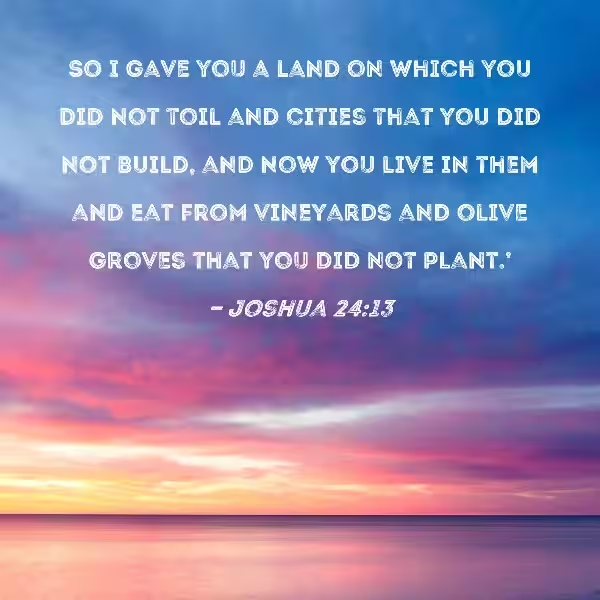
Have you ever wondered about the verses that promise abundance without requiring personal effort? Many find comfort and encouragement in the promise of divine provision, but the deeper meaning of these passages, particularly the concept of receiving "houses you did not build," holds profound spiritual significance. This article delves into the meaning and implications of scriptures like Deuteronomy 6:11, exploring its message of unearned abundance and the responsibilities attached to such blessings.
- Deuteronomy 6:11 and the Gift of Unmerited Abundance
- The Responsibility that Accompanies Abundance: A Call to Gratitude and Remembrance
- "I Will Give You Houses You Did Not Build" – A Promise for Today
-
Frequently Asked Questions about "Houses You Did Not Build" (Deuteronomy 6:11)
- What is the main idea of Deuteronomy 6:11?
- What are the key symbols in Deuteronomy 6:11, and what do they represent?
- Why does the verse repeatedly emphasize that the Israelites "did not build," "did not dig," and "did not plant"?
- Is the abundance described in Deuteronomy 6:11 only about material possessions?
- What is the implied warning or responsibility associated with this abundance?
- How does Deuteronomy 6:11 relate to other verses in Deuteronomy and the Old Testament?
- What is the significance of the phrase "when you eat and are satisfied" (or similar phrasing found in some translations)?
- Does Deuteronomy 6:11 promise unending prosperity regardless of obedience?
Deuteronomy 6:11 and the Gift of Unmerited Abundance
Deuteronomy 6:11, a pivotal verse in understanding God's provision, paints a vivid picture of the Israelites' future in the Promised Land. The verse speaks of houses overflowing with good things, wells already dug, vineyards already planted, and olive trees bearing fruit – all without the Israelites having lifted a finger.
The repeated use of "you did not" – "you did not build," "you did not dig," "you did not plant" – powerfully emphasizes the unmerited nature of this abundance. It's not a reward for their hard work, but a free gift from God, a testament to His grace and faithfulness to His covenant. This isn't simply about material possessions; it's about a relationship built on trust and dependence, acknowledging God as the ultimate provider.
This concept transcends the historical context of the ancient Israelites; it speaks directly to the heart of our relationship with God today. It challenges our modern tendency towards self-reliance and reminds us that our blessings, both material and spiritual, ultimately stem from God's grace.
The Significance of Specific Items Mentioned
The items listed in Deuteronomy 6:11 – houses, wells, vineyards, and olive trees – weren't randomly chosen. They represent fundamental aspects of life in ancient times: shelter, water, food, and wealth. Their abundance symbolizes a life of comfort and security, but even more importantly, it symbolizes God's blessing and favor upon His people.
The provision of water, particularly, speaks to the life-sustaining nature of God's grace. Wells were crucial for survival in the arid lands of the Near East. The availability of water, therefore, underscored God's provision of the necessities of life, extending beyond mere material possessions to the very essence of survival itself. This abundance wasn't just about material comfort; it was a tangible manifestation of God's covenant faithfulness.
The Responsibility that Accompanies Abundance: A Call to Gratitude and Remembrance
While Deuteronomy 6:11 emphasizes the gift of unearned abundance, the verse's context also reveals an implicit call to remembrance and gratitude. Many translations include a phrase along the lines of "when you eat and are full," highlighting the importance of acknowledging God's hand in their prosperity.
This is not merely a statement of physical satisfaction; it's a crucial reminder of dependence. The abundance is not an entitlement, but a gift that requires recognition and appreciation. Forgetting God's role in their prosperity would equate to a breach of their covenant relationship. The prosperity is conditional upon maintaining their faithfulness and obedience. This principle remains relevant today. We are called to be grateful for our blessings, regardless of their size, recognizing that they are gifts from God.
Avoiding Complacency and Self-Reliance
The consistent use of the negative phrase "you did not..." throughout the verse actively highlights God's role in providing these resources. It's not just a passive state of abundance; it's an active, deliberate act of God's grace. This active role underscores the importance of acknowledging God's sovereignty and power, preventing any form of self-reliance or pride.
The danger lies in attributing our success to our own efforts, forgetting the source of our blessings. Such complacency could lead to spiritual stagnation, a detachment from God's grace, and a weakening of our faith. The constant remembrance of God's provision is key to maintaining a healthy spiritual life.
"I Will Give You Houses You Did Not Build" – A Promise for Today
The message of Deuteronomy 6:11, while rooted in the historical context of the Israelites' journey to the Promised Land, resonates deeply with believers today. The promise of unearned abundance extends beyond material possessions; it speaks to the spiritual blessings we receive through faith in Christ. God's provision is not limited to tangible resources; it includes spiritual guidance, strength, comfort, and peace.
This verse serves as a potent reminder that our lives are a gift, a testament to God's immeasurable grace and love. While we are encouraged to work diligently and use our talents responsibly, we must never lose sight of the fact that everything we have comes from God. It is a call to live in gratitude, acknowledging our dependence upon Him, and recognizing His hand in every aspect of our lives. The implications are far-reaching; it challenges us to live lives of generosity, service, and faith, reflecting the abundance we have been given.
The phrase "I will give you houses you did not build" is not just a historical promise, but a continual affirmation of God's grace, a reminder that even in the midst of challenges, His divine provision remains steadfast and unwavering. Let us receive this promise with hearts of gratitude, living our lives as a reflection of His unending love and generosity. This naturally leads us to a life of service and worship, further deepening our relationship with God.
Frequently Asked Questions about "Houses You Did Not Build" (Deuteronomy 6:11)
What is the main idea of Deuteronomy 6:11?
Deuteronomy 6:11 speaks of God's promise of abundant provision to the Israelites upon entering the Promised Land. The core message is that this abundance—houses full of good things, wells, vineyards, and olive trees—will be a gift from God, not something they earn through their own efforts. It emphasizes God's unmerited grace and the importance of remembering His hand in their prosperity.
What are the key symbols in Deuteronomy 6:11, and what do they represent?
The verse uses powerful symbols representing essential aspects of life in the ancient Near East:
- Houses full of good things: Represents shelter, security, and overall well-being.
- Wells/Cisterns: Symbolize access to life-sustaining water, a crucial resource in a desert environment.
- Vineyards and Olive trees: Represent agricultural wealth, prosperity, and abundance of food.
These symbols collectively represent a life of comfort and security, provided entirely by God's grace.
Why does the verse repeatedly emphasize that the Israelites "did not build," "did not dig," and "did not plant"?
The repeated use of the negative phrasing ("you did not...") underscores the active role of God in providing these resources. It highlights that their prosperity isn't a result of their own hard work or ingenuity, but a direct and deliberate act of God's grace and provision. It reinforces the theme of unmerited favor.
Is the abundance described in Deuteronomy 6:11 only about material possessions?
While the verse focuses on material blessings, it carries deeper spiritual implications. The abundance is a tangible manifestation of God's favor and covenant faithfulness. It serves as a reminder of their dependence on God and calls for gratitude and continued obedience. The material blessings are meant to reflect a deeper spiritual blessing and relationship with God.
What is the implied warning or responsibility associated with this abundance?
The abundance is not an entitlement, but a gift that comes with a responsibility to remember God's hand in their prosperity. The implicit warning is against forgetting God's role and becoming complacent or self-reliant. Maintaining a grateful heart and obedient lifestyle is crucial to sustaining this relationship with God.
How does Deuteronomy 6:11 relate to other verses in Deuteronomy and the Old Testament?
Deuteronomy 6:10-12, the wider context, connects the abundance in Canaan to God's deliverance from slavery in Egypt. The verse is a fulfillment of God's covenant promises to Abraham, Isaac, and Jacob. Numerous Old Testament passages emphasize God's provision and the importance of remembering His faithfulness, even amidst prosperity. The theme of God's blessings being conditional on obedience runs throughout the Old Testament.
What is the significance of the phrase "when you eat and are satisfied" (or similar phrasing found in some translations)?
This phrase is not merely a statement of physical satiation. It marks a transition, emphasizing that the abundance is meant to foster gratitude and remembrance of God's provision. It links the physical blessing to the spiritual responsibility of acknowledging God's grace. Without this remembrance, the blessings risk becoming a cause for spiritual complacency and forgetfulness.
Does Deuteronomy 6:11 promise unending prosperity regardless of obedience?
No, while the verse describes abundant provision, it doesn't guarantee continuous prosperity irrespective of obedience to God's commands. The blessings are conditional upon maintaining a faithful and grateful relationship with God. The passage implies that forgetting God's role in their prosperity would lead to a spiritual decline.